Frozen Football: Build Your Week 15–17 Lineups on a Thermometer, Not a Ranking

Photo: snowy NFL football stadium in winter, players on frozen field, via images3.alphacoders.com
The Week Your Rankings Stop Working
Every December, the same thing happens in thousands of leagues. A manager sets a lineup based on a rankings page that hasn't factored in a single weather report, watches his quarterback throw for 148 yards into a 22 mph wind, and spends the next eleven months blaming "bad luck."
It wasn't luck. It was a forecast that was available all week, ignored.
Playoff football is played in a different sport than September football. The ball is harder, the turf is slower, and the offenses that spent three months throwing it 40 times a game suddenly discover the value of handing it off between the tackles. Your job in Weeks 15 through 17 is to notice — before the rankings do.
The Forty-Four-Degree Line
Here's the threshold worth building your process around. Historically, the biggest efficiency cliffs in cold-weather games show up somewhere in the low 40s — call it 44 degrees as a working line. Above it, you're mostly playing normal football. Below it, things start to change, and they change unevenly by position.
To be clear: temperature alone doesn't ruin a game. A 35-degree day with no wind in a dry stadium is perfectly playable offense. The mistake is treating "cold" as a single variable when it's actually three — temperature, wind, and precipitation — and wind is the loudest of the three.
Wind Is the Real Villain
If you only track one number all December, track sustained wind. Nothing disrupts a passing game like air moving at 15-plus mph, and it doesn't need to be freezing outside for that to be true. A 48-degree day in Buffalo with 20 mph gusts is worse for your quarterback than a calm 28-degree day in Denver.
When wind is in the forecast, expect:
- Deep throws to become rare or disappear entirely
- Kicking games to get shorter and less reliable
- Offensive coordinators to lean on screens, runs, and quick timing routes
- Overall play volume to compress
That last one matters more than people realize. Bad weather doesn't just hurt efficiency — it shortens drives, kills tempo, and shrinks the number of plays run. Fewer plays means fewer opportunities for everybody, including the guys you were counting on.
Who Actually Eats
Cold and wind hurt some positions and quietly help others. Here's the rough shape of it.
Running backs: the obvious winners. When passing gets difficult, the run game becomes the offense. Backs who already see 18-plus touches a game get a slight bump in volume and a bigger bump in goal-line work. The pass-catching specialists are the ones who suffer — check-downs still happen, but the downfield offense that creates those catch-up scripts evaporates.
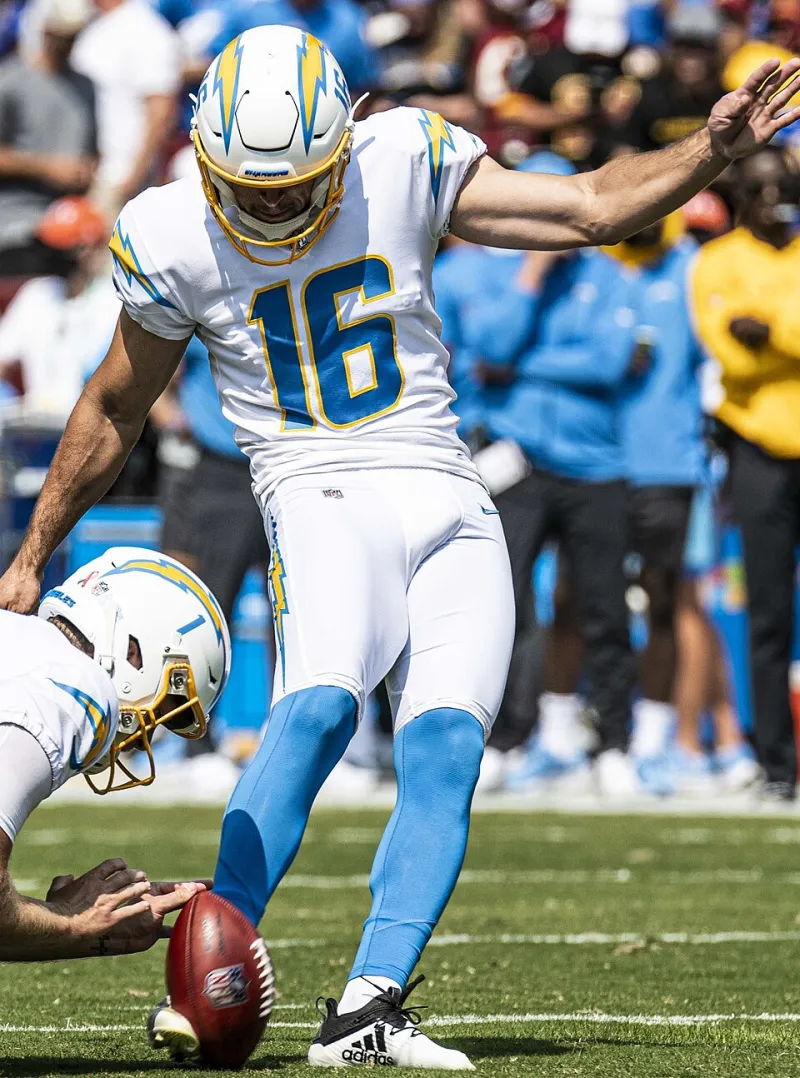
Kickers: matchup-dependent, and easier to read than you think. In a dome, they're gold. In wind, they're a coin flip on anything beyond 40 yards. If your league penalizes misses, get out early.
Quarterbacks and receivers: the fade. It's not that every cold-weather quarterback is unplayable. It's that the top-end outcome you drafted them for — 320 yards and three scores — becomes a much longer shot, and fantasy playoffs are won on ceilings, not floors.
Defenses and kickers: the quiet beneficiaries. Weather games produce short fields, more punts, more sacks, and more field goal attempts. If you're streaming a defense in Week 16, a bad-weather game is a feature, not a bug.
The Thursday Night Trap
Here's where most managers get hurt. They set their playoff lineup on Wednesday, the forecast calls for clear skies and 50 degrees, and they never look again. By Saturday night it's a 30-degree game with freezing rain and their quarterback is handing off 34 times.
Fix this with a simple habit: check the forecast three times — Monday, Thursday, and Saturday morning. If the Saturday report shows a meaningful deterioration from Monday, you still have time to adjust. If you're only looking once, you're not making a decision. You're making a guess with extra confidence.
Pre-Set So You Don't Panic
The best playoff managers do their thinking before the clock gets tight. That means identifying your pivot options in advance — the flex you'd swap in if the weather turns, the quarterback streamer with a dome game, the running back who becomes a volume lock in a sloppy game.
Write them down. Seriously. A note on your phone listing "if wind over 15 mph in [city], start [player] instead of [player]" is worth more than an hour of Sunday morning scrolling. The whole point is to remove the emotional decision from a moment when you're already nervous.
And keep a dome contingency. If you're choosing between two flex options that are close, and one of them plays indoors in Week 16, that tiebreaker is real. Tampa, New Orleans, Atlanta, Detroit, Minnesota, Indianapolis, Houston, Las Vegas, Los Angeles, Arizona, Dallas — the roof is a free floor-raiser in December.
Pre-Set, Then Go Win
The teams lifting trophies in January aren't always the ones with the best rosters. They're the ones who didn't lose a playoff week to a forecast they could've read on Wednesday.
The thermometer is free. It's public. And as of today in mid-November, you still have a month to build the habit before it actually costs you something.