The 44-Minute Ritual: Your Last Line of Defense Before Kickoff
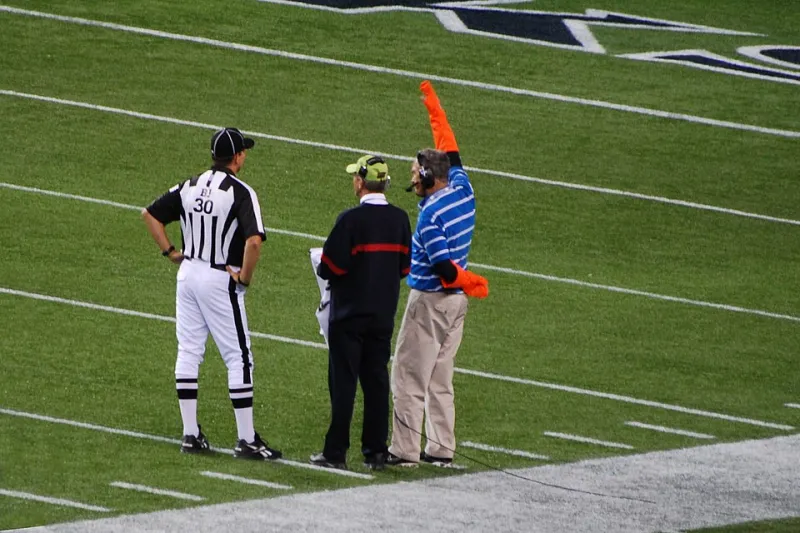
Photo: Jakobolof, CC BY-SA 4.0, via Wikimedia Commons
Every fantasy season has a moment you'll replay in your head at the Christmas dinner table. Not the draft-day reach. Not the trade that got vetoed. It's the Sunday you left 22 points on your bench because you trusted a hunch over a hamstring report.
The brutal truth about fantasy football is that most losses aren't caused by bad drafts or bad luck. They're caused by bad process in the final hour — when the lineup is set in a rush, on a phone, with one eye on the eggs burning on the stove. Let's fix that with a ritual you can run every single week.
The Anatomy of a 44-Point Swing
Start by accepting the math. In most leagues, the gap between a win and a loss is somewhere between 5 and 15 points. But the gap between a good lineup decision and a bad one is routinely 30, 40, sometimes 50 points. That's the swing we're hunting.
The classic examples:
- The injured starter. You saw the Friday injury tag, told yourself "he always plays," and he exited in the first quarter with three fantasy points.
- The matchup chaser. You benched your steady WR1 for a boom-or-bust receiver facing the league's worst secondary. The bust part showed up.
- The gut-feel flex. Two similar players, you went with the name you liked more. The name scored nine. The other guy scored 24.
None of these feel like disasters in the moment. That's what makes them so expensive. A 44-point swing doesn't announce itself — it hides inside a decision that takes eleven seconds to make.
Why Your Brain Sabotages You on Sunday Morning
By Week 6, you're not evaluating players anymore. You're evaluating your story about those players. You drafted him in the fourth round, so he must be good. You dropped her rival's favorite sleeper, so the matchup must be fake. Psychologists call this motivated reasoning; fantasy managers call it "I had a feeling."
The fix isn't more research. You've already done the research. The fix is a structured final review that forces your eyes onto facts your gut is trying to skip.
The 44-Minute Pre-Kickoff Checklist
Set a calendar alarm for 44 minutes before the early window. Then run this, in order, in under ten minutes:
1. The Injury Sweep (10 minutes). Check every starter — including your kicker and D/ST — against the latest official injury designations. Not beat writer vibes. Actual designations. If a guy is questionable and played limited practice all week, you need a contingency before inactives drop, not after.
2. The Weather Check (5 minutes). High winds and heavy rain crush passing games and kickers. If your QB is playing in a December lake-effect game in Buffalo, that's worth 8-10 expected points you're not accounting for.
3. The Role Audit (10 minutes). Don't ask "is this player good?" Ask "what is this player's role this week?" Check for reports on backfield splits, target hierarchies, and any coach quotes from Friday. A backup who's suddenly the goal-line back is worth more than a name-brand receiver in a timeshare.
4. The Bench Scan (10 minutes). For every starter, ask one question: "What's my best case for the guy on my bench?" If the answer is "he could go off," that's not an answer. But if the bench player has a clearer path to volume — a starter questionable with an injury, a matchup edge, a role change — you've found the swing before it finds you.
5. The Gut Override (5 minutes). Here's the counterintuitive part: once you've run the checklist, trust your gut within the facts. If the data is a coin flip, go with the player you'll enjoy rooting for. But never let the gut overrule steps 1 through 4. The gut gets a vote, not a veto.
The One Rule That Saves More Seasons Than Any Other
If you take nothing else from this: never start a player whose status will be decided after kickoff if you have a viable alternative whose game starts later.
This is the single most common unforced error in fantasy football. Your early-window starter is questionable, your bench option plays in the late window or on Monday night. Starting the questionable guy means you might get a zero with no recourse. Starting the healthy guy means you at least get real information before the week closes.
You don't win by being right more often. You win by never being helplessly wrong.
Make It a Habit, Not a Heroic Effort
The managers who cash out at the end of the season aren't the ones who made the flashiest waiver adds. They're the ones who did the boring things 17 weeks in a row. Forty-four minutes, five steps, once a week.
Your future self — the one hoisting the trophy in Week 17 while your league-mates replay their Sunday blunders — is counting on the version of you who sets the alarm. Set it now. Kickoff waits for nobody.